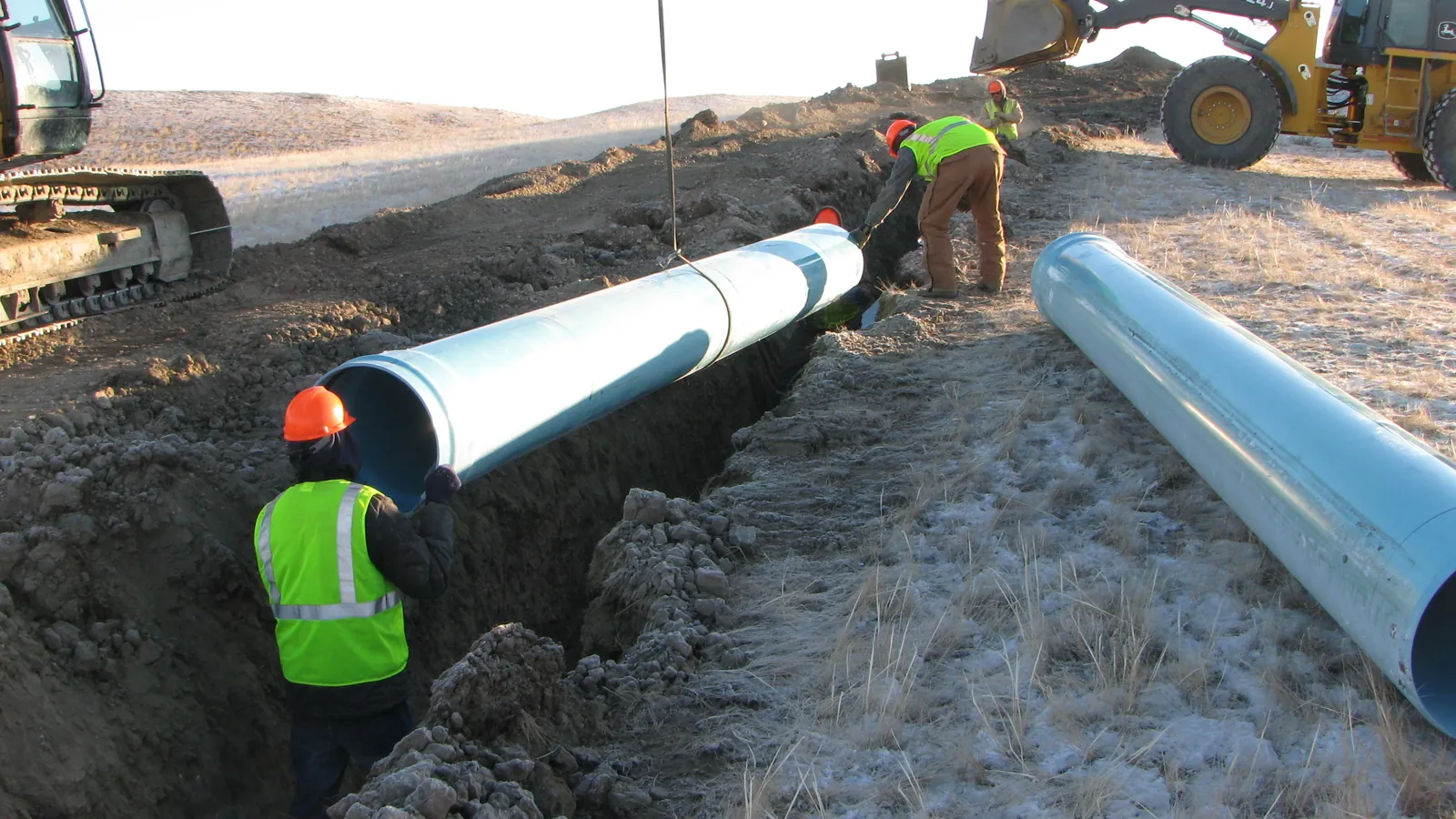
How Much Does Trenching Cost in Connecticut?
National cost guides put trenching at $5 to $12 a linear foot for a standard dig. One guide raises that to $13 to $40 a foot for obstructions, difficult soil or a long run.
That is the price of the trench alone. The pipe or the cable, the licensed trade’s hookup and the utility’s own fees are separate costs. A guide’s price for a whole water, sewer or electric line includes the pipe and the trade’s work.
These are market numbers, not our price list. All Star Wrecking does utility trenching in Monroe and across Fairfield County. We price each trench after we look at the site.
How much does trenching cost per foot?
Two national cost guides split the trench price into equipment and labor. If you are pricing utility trenching for a new line, start with these rows.
| Trench cost per linear foot | One national guide | A second national guide |
|---|---|---|
| Standard trench, total | $5 to $12 | $5 to $12 |
| Equipment | $2 to $3 | $3 to $5 |
| Labor | $3 to $9 | About $5.75 |
| Obstructions, difficult soil or a long run | Not listed | $13 to $40 |
The first guide says trenching costs less in soft, loose soil and more in hard clay or rocky soil. The second says rocky ground and steep slopes push the price up.
A third guide, dated May 2026, starts at $11.55 to $27.48 a foot. Its base price is for a trench up to 2 feet deep in soil with no rock.
What does a whole water, sewer or electric line cost?
These are whole-job prices. Both guides count the trench and the installation in them.
| Whole job, trench included | One national guide | A second national guide |
|---|---|---|
| Water line | $800 to $3,000 | $800 to $3,000 |
| Water line, per foot installed | $30 to $50 | Not listed |
| New water line connected to the meter | $1,700 to $3,000 | Not listed |
| Sewer line | $1,600 to $7,200 | $1,439 to $5,724 |
| Underground electric | $500 to $3,800 for 50 to 150 feet to a shed, garage or shop | $600 to $2,100 |
The first guide’s sewer price covers labor, materials and trenching up to 40 feet from the house. The second guide’s electric range covers jobs like a hot tub, a generator hookup or new panel work.
In Connecticut the hookups belong to other trades. A licensed plumber makes the water connection, and a licensed electrician lands the electric service. Our part is the trench: dug, bedded and backfilled.
Bringing utilities to raw land means pricing each line on its own. The state code lets a water line and a sewer line share a trench, under set conditions.
How does the Connecticut frost line change the trench price?
Connecticut’s building code sets the frost line at 42 inches for the whole state. Its plumbing chapter puts a water service pipe at least 6 inches below that line. That puts a water line about 4 feet down, about twice as deep as the third guide’s base trench.
Depth also brings safety work. Under federal OSHA rules, a trench 5 feet deep or more needs a protective system before anyone works in it. The second guide counts shoring for a trench that deep as an extra cost.
For electric and gas lines, the electrician, the utility and the plan set the depth. A sewer line goes to the depth and the pitch on the plan. Our utility trenching page covers how deep each line goes.
What drives the trench price in Fairfield County?
The ground comes first. A common upland soil in Fairfield County formed in glacial till. A common ledge soil here has hard bedrock 10 to 20 inches down. One guide puts removing large boulders or rock ledge at $50 to $250 a cubic foot.
Rock also changes the bedding. Connecticut’s code wants rocky ground dug two or more pipe diameters deeper, then brought back up with compacted granular material. Backfill has to stay free of rocks until 12 inches of tamped earth cover the pipe. On rocky ground, sand or fine gravel brought in for bedding adds to the price.
Length sets the base, since the guides price by the foot. The second guide says soil conditions and yard access decide how much labor a job needs. A tight side yard or a steep slope adds machine time.
What the trench crosses matters too. On a gravel drive, the trench gets backfilled and that section rebuilt. For that work, see what a gravel driveway costs.
Under pavement, some owners hire a directional boring contractor instead. A stone wall in the path means opening a gap or going around it. Roots and stumps in the line add digging.
The dirt that comes out needs a place to sit. OSHA rules keep it at least 2 feet back from the edge of the trench. Rocky spoil may have to leave the site, and clean fill comes in to replace it.
The code has backfill placed in 6-inch layers and tamped in place. Then topsoil and grass seed go back on a lawn. A paved drive needs a paving contractor for the patch. Topsoil and seed prices are in what land grading costs.
Wet ground near a brook or a pond slows the dig. Connecticut defines wetlands by soil type, and brooks and ponds count as watercourses. Near one, check with the town’s wetlands agency before the dig is planned.
The guides price some extras on their own. Each row is a national number.
| Extra on a trench job | One national guide | A second national guide |
|---|---|---|
| Fill dirt, per cubic yard | $5 to $25 | $5 to $15 |
| A stump in the trench line | $100 to $400 | $175 to $550 |
| Directional boring instead of a trench, per foot | $10 to $30 | Not listed |
Why do the Call Before You Dig marks affect the price?
Before any digging with power equipment, a Call Before You Dig request goes in. It goes in at least two full days ahead, not counting weekends and holidays. The utilities then mark the lines they own.
Near a mark, we open the ground by hand until the line is in sight. One guide says hand digging takes longer and raises labor costs. By its count, 100 feet takes 2 to 3 hours with a trencher. By shovel it can take up to 10 to 12 hours.
The call does not mark everything. Connecticut’s rules leave out lines a homeowner owns that serve only that house. A feed to a garage or a barn can be one of them. Tell us what is buried back there before the dig starts.
How do you get a real number for your trench?
Your number comes from the length of the run, its depth and the ground under it. All Star Wrecking is based in Monroe and works across Fairfield County. The company’s background includes water main work for cities and towns.
Trenching is one part of our excavation work. On a new house, the service trenches follow the foundation dig as part of our site work. Market ranges for the dig itself are in what a foundation dig costs in Connecticut.
We look at the site and send a written estimate, and the estimate is free. Call (412) 944-9931, or read how our utility trenching work runs.